
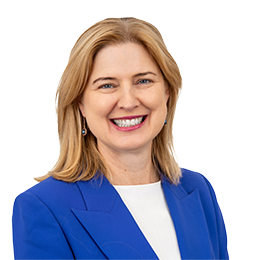
Interview with James Glenday, ABC News Breakfast
19 March 2026
E&OE TRANSCRIPT
TV INTERVIEW
ABC NEWS BREAKFAST
THURSDAY, 19 MARCH 2026
SUBJECTS: Impact of Middle East conflict on Australian agriculture
JAMES GLENDAY, HOST: Let's get more on our top story, and of course that is the effect of the war in Iran on Australian fuel and fertiliser supplies, and of course all the ramifications for the economy and you at home. The Agriculture Minister, Julie Collins, joins us now from Hobart. Minister, welcome back to our program.
JULIE COLLINS, MINISTER FOR AGRICULTURE, FISHERIES AND FORESTRY: Good morning, James, and to your viewers this morning.
GLENDAY: So National Cabinet is going to be meeting today. We know that a big question that farmers are asking is are they going to have the fuel, and perhaps more importantly, the fertiliser that they need to plant a winter crop this year. What's your view?
COLLINS: Well, certainly we have been engaging with farmers and farmers' representatives as well as fertiliser organisations for the past two and a half weeks, as you would expect us to do. In terms of fertiliser, we understand that there is enough in the country at the moment or on the water on its way here to deal with the initial cropping season. But things do get tight given that we don't know how long this might go on if it continues to go on for some time. But this is a global conflict, obviously, it is impacting people right across the globe. Our job as a Government, of course, is to liaise with the impacted industries and to work in a considered but urgent way to resolve some of the challenges, and certainly we've seen some of those in the way that fuel distribution has been occurring around the country, and we have announced a range of actions to be able to deal with that. We've been getting intel from the sector, and I do want to thank Australia's farmers and our farming industry and representatives for the intel that they have been providing to us as a Government over the past two weeks, and I am sitting down and having a meeting today with more than 50 representatives from across the farming sector and agriculture industries today to gather further intel and to get input from them on what is happening on the ground so that we continue to hear daily exactly what is happening on the ground right across the country.
GLENDAY: Can I just take you back to the potential shortages. When are you expecting fertiliser shortages to bite?
COLLINS: Well, at the moment all of the intelligence that we have from our fertiliser companies suggest that this will be around late May, June. Obviously, as I said, there is enough fertiliser in the country at the moment or on the water to deal with the initial cropping season that is about to start. Clearly we can plant crops without fertiliser, but the yield and the productivity of those crops is somewhat diminished, so we want to continue to work with organisations. We're also, of course, talking to other countries about alternative sources given that a large amount of fertiliser does come through the Middle East through that Strait.
GLENDAY: So it does sound like we do have a little bit of time, but if fuel prices get to a certain point and yields are going to be lower because fertilisers are in short supply, some farmers might think, “I will just sit this season out.” What sort of flow on effect could that have on the nation's food supply?
COLLINS: Well, obviously we are quite a food secure nation, we can produce almost everything we need to eat and we can produce it more than enough to feed all Australians. It's about the distribution of that and about making sure that we get it across the country, but also to our near neighbours who rely on that for their own food security. As I said, Australia does produce a large amount of food and product, and we want to make sure that that's able to continue, and that's why we've been engaging so closely with our farmers about the fuel and about the fertiliser situation. And as I said, they have been terrific in terms of the contact they've been making daily with me, with my team and with my department about the situation on the ground, and today's roundtable really is about another opportunity to be able to get a broader picture of what is happening on the ground. My department has also started to do a bit of modelling in relation to production areas across the country and having a look at the seasonality of those, you know, in terms of whereabouts those bottlenecks may be occurring.
GLENDAY: We're expecting to hear from Premiers at National Cabinet later today. Some of them are concerned about specific industries, including farming and things like shipping. Do you expect that the Albanese Government's going to have to provide some sort of specific industry support if this conflict drags on for more than a month or so?
COLLINS: Well, obviously, as you would expect us to do, we're working day and night on the immediacy and some of the initial challenges. Given that this is a global conflict, it is affecting other countries right across the globe, so we have been day and night on the immediacy, but we're also now looking and have been looking at the medium and long term if this goes on for some time, as you would expect us to do as a Government. So we are planning a range of scenarios, but certainly we are dealing with the immediacy and making sure that we get that fuel to where it needs to go and making sure that we've got enough fertiliser for the coming seasons.
GLENDAY: You're having a lot of meetings at the moment. The US Vice President overnight conceded that “America has a problem,” that's his words, and he declared that this war with Iran would be temporary for sure. Has your Government been given any indication behind the scenes about what America's plan is here and how long this is likely to drag on, or are you reacting in real time like we all are to the latest statements from the White House?
COLLINS: Well, obviously I'm not going to, you know, talk live on air about communications between governments, but what I would say is that we do have good relations right across the globe. One of the first things our Government did was of course restore some of our international relations when we came to government. Australia's agriculture trade in my area is the most diversified it's ever been because of what we've been able to do in terms of those international relations and our international relations with the US and with other countries remain strong.
GLENDAY: Yeah. Are they telling you though this is going to be a couple of weeks, a couple of months, are you getting any idea at all from our allies about what's going on here?
COLLINS: I don't think any of us have a crystal ball in terms of how long this conflict might go, and that's why as a government, we're dealing with the immediate challenges but also looking at medium to long term what it might mean for Australia and what we might need to do as a government.
GLENDAY: Agriculture Minister, Julie Collins. Thanks for joining our show this morning.
COLLINS: Thanks very much.