
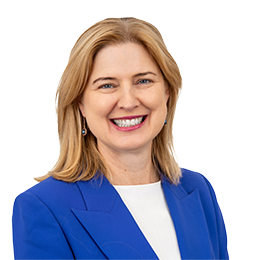
Interview with Sally Sara, ABC RN Breakfast
19 March 2026
E&OE TRANSCRIPT
RADIO INTERVIEW
RADIO NATIONAL BREAKFAST
THURSDAY, 19 MARCH 2026
SUBJECTS: Middle East conflict, fuel and fertiliser for Australia’s farmers and producers
SALLY SARA, HOST: Sally Sara with you for Breakfast this morning. The Prime Minister has flagged further action to shield Australians from global uncertainty in the days ahead as the ongoing Middle East conflict increasingly threatens food and fuel security. Anthony Albanese will meet with state and territory leaders today, with talks focusing on strengthening cooperation around supply lines. Julie Collins is the Federal Minister for Agriculture, Fisheries and Forestry and joins me now. Minister, welcome back to Breakfast.
JULIE COLLINS, MINISTER FOR AGRICULTURE, FISHERIES AND FORESTRY: Thanks very much. It's terrific to be on, Sally, and good morning to your listeners.
SARA: How concerned are you about the escalation of the war overnight in the Middle East, will both Israel and Iran targeting major energy sites?
COLLINS: We obviously are monitoring very closely the situation, but what we have been doing since the outbreak of this conflict, around two and a half weeks ago, is we have been working on the immediate challenges that it has been presenting, but also, planning for the short, medium and long term as the Government, as you would expect us to do. We've been seeking feedback from a range of industry and people on the ground. So certainly, we have been having regular meetings with the National Farmers' Federation, for instance, the Trucking Association, the Petroleum Institute, and indeed Fertiliser Australia about the situation. And obviously, I'm working with the agriculture sector and industry. I've got a meeting today of more than 50 representatives of the sector to get feedback about what exactly is happening on the ground and where they're at.
SARA: Has there been price gouging when it comes to fertiliser? You were just mentioning fertiliser.
COLLINS: I understand that we have enough fertiliser either in Australia now or on the water in terms of the immediate requirements for the coming season, but I do understand that if this goes on for some time, that might get tight. So we've obviously been working with international partners and looking for alternative sources.
SARA: But just to bring you back to the question, are you aware of price gouging already when it comes to fertiliser?
COLLINS: Well, we have heard some reports. So we are engaging, and we are doing a similar mechanism that we have done with the ACCC for fuel in terms of fertilizer. We're in the process of doing that at the moment. That will allow fertiliser industry and organisations to actually work to make sure the fertiliser is getting where it needs to go.
SARA: What's your message to any suppliers of fertiliser who may be price gouging right now?
COLLINS: What I would say to everybody about the current situation is we all need to be acting in the national interest. I think our Government has been very clear that this should not be seen as a commercial opportunity for anybody, that this is about what is in the national interest. This is a conflict that is impacting globally, and what we need Australians to do is to act in the national interest, and that includes everybody along that supply chain.
SARA: Let's have a look at fuel. Some regional communities are experiencing fuel supply issues. What action is the Government taking to ensure that fuel is distributed to those areas?
COLLINS: Certainly Minister Bowen announced last week a few actions that we're taking. One, of course, is Ampol and the additional fuel that will go into the system and making sure that that does get to regional communities. The other is, of course, releasing 20 per cent of the national stockpile, which is 762 million litres, going into those areas, particularly into regional towns. We have said to the petroleum companies that that will only be released on the condition that it is going to where it's needed most, and we've been collecting feedback and information from people on the ground about where that is and what the situation is in various regions across the country.
SARA: How are you deciding who or which regions get priority?
COLLINS: Well, we obviously are doing everything we can to be fuel secure. I have mentioned many times now that I've got ABARES in my Department doing some work on the regions' production capacity and where they were in terms of their seasons and cycle, and we're working with Minister Bowen's Department on that, and working with the Petroleum Institute and fuel companies about making sure that it does get to where it's needed.
SARA: So, do you have priority areas decided as yet, or is that process still ongoing?
COLLINS: No, we're working through that and we're working with Minister Bowen's office. We've been getting intel, of course, from the agriculture sector, from farmers on the ground, and we've been feeding all of that into the system to make sure that we've got a bit of an understanding of what is happening on the ground. And as I said, I'm meeting with the entire sector, more than 50 representatives today, to get a bit more intel about what is occurring on the ground.
SARA: So, at the moment, the Government doesn't know the areas where there are shortages?
COLLINS: We do know some areas, absolutely we do, and we've had a report about areas where there has been increased demand, and Minister Bowen has mentioned those last week in the Parliament. But we're obviously compiling all of that information and data as it's coming through.
SARA: How long's it going to take until the Government is confident that it has a clear picture of where the fuel needs to go?
COLLINS: As I said, we've got a clear picture at the moment about where we think it needs to go at the moment, but we are looking and undertaking, as you would expect, due diligence about if this goes for longer. That's what we're doing at the moment.
SARA: So, just so I understand clearly, is ABARES working up a list of where it needs to go, or you already have that list?
COLLINS: No, my Department is doing a bit of mapping in relation to the production areas. Minister Bowen's office has been working on where the fuel needs to go and working with distributors on that.
SARA: So does the Government have a clear idea now…
COLLINS: Yes, we do.
SARA: …Of the areas that need it? You do, okay.
COLLINS: Yes.
SARA: So, earlier this morning, we spoke to Danny Allen, a farmer on Yorke Peninsula in South Australia, who says it will cost almost double to put crops in the ground compared to previous years, when seeding begins in the next few weeks. Let's take a listen.
[Excerpt]
DANNY ALLEN: I think we need some more security. Like we need, we need to start to make some money out of our own resources. Like we're just not getting anywhere. We're just getting taxed into oblivion. We have no national security for food or fertiliser, it's just - or fuel. We're really, we're sort of down the hole.
[End of excerpt]
SARA: What do you say to farmers like Danny Allen?
COLLINS: What I say to him is we have been working in terms of a food security strategy and we have been working - I know Minister King, Madeleine King, has been talking about the Perdaman plan in terms of urea production in Australia, and we are working on a food security strategy in terms of the medium to longer term and turning around some of this. We agree with him in terms of we do need to make better value of our resources here in Australia and value-add, and that's certainly what our National Reconstruction Fund and what our Future Made in Australia has all been about. It's about making sure that we have more sovereign capability and we actually can value-add here in our own country.
SARA: Yesterday, the Prime Minister said the Government has spoken to South Korea about its shipments of diesel. Has the Government received any assurances over supply, given how important fuel is for primary producers?
COLLINS: Obviously, we have been engaging with our international partners, because as I said, this conflict is impacting globally on a range of supply issues, and those conversations have been ongoing and they continue. What I would say is, is that fuel continues to come into the country in the usual way, and certainly we've seen supply coming into the country in the volumes that we would expect to date.
SARA: The National Road Transport Association has urged the Government to provide relief to transport businesses grappling with rising fuel costs, including temporarily reducing the road user charge for heavy vehicles. Will the Government consider that to protect these companies and consumers from price spikes?
COLLINS: I know that my colleague and Minister Catherine King had a meeting with her industries yesterday in relation to transport and aviation. Again, to get a closer picture of exactly what is happening on the ground. We have had representatives of the Trucking Association in our weekly meetings that we are having with industries more broadly across Minister Bowen, Minister Ayres, Minister King and myself. We are having conversations about what we need to do in terms of the immediate challenges, but as I said, in terms of medium to longer term too. As you would expect of a mature Government, we are planning for the short term, as well as the medium and long term, in terms of the impact of this conflict.
SARA: Julie Collins, thank you for your time this morning.
COLLINS: Thanks very much.