
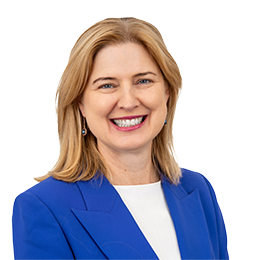
Doorstop in Melbourne, Victoria
17 February 2026
E&OE TRANSCRIPT
DOORSTOP
MELBOURNE
TUESDAY, 17 FEBRUARY 2026
SUBJECT/S: Investment in agriculture innovation; AU-EU FTA; China Beef Safeguard; agricultural trade; AgriFutures Australia; communities impacted by severe weather; grains levy.
JULIE COLLINS, MINISTER FOR AGRICULTURE, FISHERIES AND FORESTRY: Well, it’s terrific to be here at EvokeAG with the Chair, Mick Veitch. EvokeAG is a terrific conference that shows the innovation of technology and the impact that it can have on our farms. As people would know, Australia’s farmers are some of the best on the globe. They have some of the lowest emissions, some of the greatest uptake of innovation and are some of the most efficient when it comes to water and fertilizer use. But what we want to see is Australian agriculture continue to grow. We’re on track for $100 billion, and indeed 80 per cent of that is exported in value across the globe, which is really important. But it’s terrific to be here at this conference and to be able to open it this morning. Also to be able to announce $450,000 to ensure that the Federal Government continues to invest in EvokeAG going forward, over the next three years. So it’s terrific to be here, and I’ll hand over to Mick to talk a little bit more about EvokeAG.
MICK VEITCH, CHAIR OF AGRIFUTURE AUSTRALIA: Thank you, Minister. First of all, I’d just like to thank the Australian Government for providing $450,000 worth of funding for EvokeAG. This money is really well spent, it’s a huge investment into the research community across Australia. EvokeAG, there is 2000 people here. It is a phenomenal experience for anyone to come and have a look at. We have researchers, innovators, and investors. We have farmers, we have producers, we have other RDCs here. This is a huge network of people who, over two days, are going to have a lot of conversations, they’re going to talk about a lot of ideas, and hopefully help the minister achieve some of those quite aspirational targets that we’re looking at around food security, productivity, and climate change.
COLLINS: All right, thank you. Questions?
JOURNALIST: Minister, we’re obviously at the pointy end of the EU free trade agreement. There has been some concerns from the agriculture sector about whether or not we will be giving up anything in the Australian and [indistinct] exports area to get more concessions from the EU. Are we going to get a better deal than we got at the previous negotiations we walked away from?
COLLINS: Well, both our Prime Minister and our Minister for Trade and myself have been pretty clear that we do want to have this conversation. But indeed, what we want to do is make sure that it is a better deal for Australian agriculture than we walked away from last time.
JOURNALIST: Have you been lobbying for any particular ag inclusions for the deal?
COLLINS: Obviously, we have discussions, and I’m not at liberty to talk about those discussions. What I would say is that as the Minister for Agriculture as you would expect from me, I continue to stand up for Australian agriculture.
JOURNALIST: Australian beef producers will be eyeing very closely the China trade, including the higher quotas that were placed recently, sorry, the lower quotas that were placed recently at the start of this year. How confident are you that you can get those quotas lifted?
COLLINS: Well, obviously, this is a safeguard measure for beef industry across the globe that China has implemented, not just for Australia. As I have said previously, it is a formula that has been consistent across the globe. Both the Minister for Trade and myself continue to say that we have some concerns about this, and we think that it will negatively impact on the Australian industry. We also don’t think the Australian beef industry is having a negative impact on the Chinese industry.
JOURNALIST: Do you think that you can get those lifted though? Are you in conversation with your Chinese counterparts?
COLLINS: We’ve certainly had discussions and we’ve put across our serious concerns, and we’ve also put across some suggestions on how we might resolve the matter.
JOURNALIST: Is the Prime Minister going to make a captain’s call on those quota levels, like what’s been recorded in some rural press?
COLLINS: In terms of the EU free trade deal what I’d say is as the Minister for Agriculture I continue to stand up for Australian ag. Both the Prime Minister and the Minister for Trade are on the record saying we need to get a better deal for Australian agriculture.
JOURNALIST: You’re moving towards a conclusion on the canola trials with the Chinese Government. Where are those up to currently, and are you confident that we can get Australian canola oil back into China?
COLLINS: Under our government what we’ve done is diversify our agricultural trade. Our agriculture trade is now the most diversified it has ever been. We continue to have discussions with countries right across the globe, including, of course, in terms of the Chinese Government and our canola industry. We have been a big supporter of diversification of Australia’s trade, and we continue to have discussions across the globe.
JOURNALIST: It’s AgriFuture’s biggest event, right, Evoke here, you’ve announced more money for it as well. I’m sure you’re aware, though, in Senate estimates, there was a lot of questions about how Mick, who is standing next to you, got his job and whether Cathy McGowan, the former Chair of AgriFutures, applied for her job or not. As minister, do you have any comments or concerns about how that process was conducted?
COLLINS: What I would say is that we had an open and transparent process in relation to the Chair, and I’m really pleased to have Mick Veitch on board, and I have thanked Cathy McGowan today for her contribution.
JOURNALIST: Did Cathy McGowan do a bad job as Chair of AgriFutures?
COLLINS: As I said, there was an open process, and I’m pleased that Mick Veitch is the Chair of AgriFutures, and I thanked Cathy McGowan for her service.
JOURNALIST: The NFF have heard member concerns that the shift of cost recovery for agricultural exports could be used to fund departmental costs. Can you assure farmers that the fees will only be used for export regulatory services?
COLLINS: What we’re doing in terms of the cost recovery impact statement is that this hadn’t been changed for many years. It was supposed to be done under the former government, and it had not been. We don’t think that the taxpayer should continue to fund what are essentially services for the export industry. We are in a consultation phase at the moment with the industry and different sectors of the industry in relation to cost recovery.
JOURNALIST: Sorry, the BOM released its long-range forecast last week for autumn. Again looking at another really dry autumn into winter. Will the government be coming forward with any more drought support, including interest-free RIC loans?
COLLINS: Look, we certainly know that there are people doing it tough. We certainly know that the dry conditions have been impacting, talking to some people in Victoria just last week, they were saying that they are concerned that Victoria may dip into drought again. There are certainly some very serious dry conditions still in South Australia and parts of New South Wales. As a government, we continue to monitor those. I have been able to, and previously announced, some changes to the Regional Investment Corporation, to the RIC, in terms of interest rate and in terms of loans available, particularly a new concessional loan for drought farmers, for farmers in drought.
JOURNALIST: Sorry, Minister, you mentioned dipping back into drought. Do you not accept that large parts of Victoria, most of Victoria is in drought currently?
COLLINS: Of course I do, yes. I meant the broader area.
JOURNALIST: Minister, I wanted to ask you about the recent Grain Producers Australia survey. It showed that growers voted, growers voted in favour of reducing the levy to the GRDC. What was the rationale behind rejecting GPA’s proposal to reduce those levy systems?
COLLINS: Yeah, I’ve asked the two representative organisations in relation to the levy process of both GPA and Grains to actually work together and to come up with a comprehensive business case. What I have said to them is that on what has been put before me to date is that I cannot approve a reduction in the levy.