
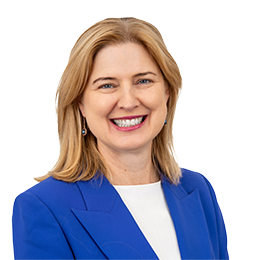
Interview with Bec Pridham and Laurissa Smith, ABC Country Hour
7 May 2026
E&OE TRANSCRIPT
RADIO INTERVIEW
ABC COUNTRY HOUR
THURSDAY, 7 MAY 2026
SUBJECTS: Budget; Australian Fuel Security and Resilience package; Fertiliser and fuel for Australia’s farmers and producers; agricultural land use
BEC PRIDHAM, HOST: If you're just tuning in now, you're listening to Agfest live from Quercus Park with myself, Bec Pridham and Laurissa Smith. Now joining us is the Australian Agricultural Minister and Tasmanian MP Julie Collins. Julie, let's start with what Hamish had to say just there around changes to capital gains exemption and how that might make it difficult for generational farmers. What's your response to his comments there?
JULIE COLLINS, MINISTER FOR AGRICULTURE, FISHERIES AND FORESTRY: What I'd say is, is the Budget's on Tuesday. We don't have long to wait now to see the detail of that Budget. But certainly the things that our Government has been focused on, as you've seen since the time we came to office, but importantly since the outbreak of this war in the Middle East, is we want to keep farmers farming. And that's certainly been our focus and our priority, and certainly mine, as Agriculture Minister, has been that.
PRIDHAM: Yesterday, your Government announced a $10 billion fuel package to, you know, to help ease the situation here. How do you see that trickling onto farmers and affecting them?
COLLINS: Well, obviously, a substantial amount of that is about underwriting more fuel and particularly more fertiliser into Australia to make sure that our farmers do have the inputs that they need. And certainly, we've already seen, since the Export Finance Australia underwriting, we have seen more fuel come to Australia and particularly more diesel, which we know is so critical for our primary producers. We've now got two fertiliser companies who's entered into an arrangement with Export Finance Australia in terms of being able to get more fertiliser into Australia, and they're also going to start work with some more fertiliser importers and companies shortly. And what you've seen from our government is a real focus, particularly working with countries overseas and using those strong international relations, is to get more fuel and fertiliser into Australia.
PRIDHAM: Supply is one thing, the cost is another. How are you going to ensure that it's affordable for farmers to access this?
COLLINS: Well, obviously, we've reduced the fuel rebate up until the 30th of June, and that obviously includes diesel. So, we have done that. We've been working with, as I said, the fertiliser companies in terms of getting fertiliser into Australia. We know that the price is an issue. I've been out and about, too, and I know, you know, talking to farmers, that they are making decisions already about their planting because of the input costs of fuel and fertiliser. You know, we're not intervening in the market per se, but we've certainly done what we can in terms of fuel with the excise reduction. And certainly, we continue to have great engagement with the industry and the sector about some of the difficult choices we know farmers are making at the moment.
PRIDHAM: The excise has certainly brought down the price of unleaded, diesel hasn't really changed all that much. Has that really done enough?
COLLINS: Well, it's certainly had an impact as we know, certainly helping with cash flow of farmers. But we do understand, you know, those initial shocks and those input costs have been going up for farmers, and they are making some tough decisions. And we certainly continue to have engagement and working with the industry and the sector about, you know, is there anything further that we need to do as a government.
LAURISSA SMITH, HOST: Because at some point, that excise is going to be removed. So, in a way, the farmers are saying, "Well, that's creating a false sense of security".
COLLINS: Well, we're doing everything we can do to make the environment as secure as we can. I mean, you know, this is, you know, a war in the Middle East. It is impacting globally, and that includes here at home in Tassie and Australia, and our job as the government is to shield people as much as we can do. And certainly, you've seen us do that. I think getting critical supplies into the country, I think that most people would say, if you look back two months ago when this war started, Australia is in a much better position than people thought we would be at this point in time. And that's due to the hard work of our government and, you know, using those international relations and having those discussions and working with industry and with sectors to try and shield Australians, and particularly our farmers and primary producers, as much as we can to keep our food security strong.
PRIDHAM: Both with fuel and fertiliser, with this new package, we know that price gouging, particularly with fertiliser, has been an issue. How are you going to ensure that that doesn't happen?
COLLINS: Well, we've obviously also been working with the ACCC in terms of making sure that they have the powers necessary to be able to do that. We've also been working, obviously, with fertiliser companies to make sure that we're working together and not competing against each other in terms of trying to secure imports into Australia. So, we're doing everything we can do as a government, and we're using all the tools of government to do what we can do to try and shield people as much as we possibly can.
PRIDHAM: Budget’s coming up next week. Will there be any measures for farmers specifically in that?
COLLINS: Oh, well, I think $10 billion announced yesterday that benefits our primary producers is pretty significant. And you've seen the reaction from, from the National Farmers Federation, but also I think more broadly from across the economy and industry that this is very significant, and is exactly what people have been asking for in terms of surety, as much as a government can be in terms of the supplies that we need getting into Australia.
SMITH: Federal Agriculture Minister Julie Collins is our guest on the Country Hour. Another topic that we've been following locally is the handling of the sale of Tasmania's largest farm, Rushy Lagoon, to a foreign investment firm, Gresham House from the UK. The Foreign Investment Review Board is onto its third extension to review the sale. What's the holdup?
COLLINS: Well, obviously, the Foreign Review Investment Board makes decisions separately and makes them in relation to a whole range of investments coming into Australia that reach that threshold. As a Government, we're not intervening in any commercial arrangements in terms of the sale, and the Foreign Investment Reviewer Board will make their decisions in their usual manner.
SMITH: Is the Clean Energy Finance Corporation subsidising the sale of Rushy Lagoon to a foreign company?
COLLINS: Look, I can't comment on the individual details of, you know, what might be a proposed sale. I mean, that's not my place as a minister. What I would say to you is is that things are going through the usual process and, you know, going through in the usual way that they ordinarily would.
SMITH: But should prime agricultural land be planted out to pine trees and subsidised with taxpayers' money?
COLLINS: Well, a lot of decisions around planning and land use are decisions of state and local governments. They're not decisions that federal governments ordinarily make. I mean, we know, that is really decisions for state and local governments in terms of planning use. And a lot of states around the country restrict and protect some prime agricultural land. So, I'm not sure what classification the Tasmanian State Government's got on this particular farm. But what I would say is, you know, they're decisions for state and local governments.
SMITH: Ok. Julie Collins, Federal Agriculture Minister, thank you for coming on the Country Hour.
COLLINS: Thanks very much.