
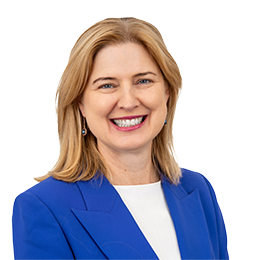
Interview with Lucy Breaden, ABC Hobart Drive
10 March 2026
E&OE TRANSCRIPT
RADIO INTERVIEW
ABC HOBART DRIVE
TUESDAY, 10 MARCH 2026
SUBJECT/S: Impact of conflict in the Middle East; David Littleproud.
LUCY BREADEN, HOST: So what does this mean for organisations that rely on fuel and require a constant supply? Let’s find out from Julie Collins, the federal Minister for Agriculture, Fisheries and Forestry. She’s been part of a roundtable looking at this today. Minister, hello, thanks for your time.
JULIE COLLINS, MINISTER FOR AGRICULTURE, FISHERIES AND FORESTRY: Good afternoon, Lucy, and to your listeners this afternoon.
BREADEN: So, just quickly on the fuel supply, do people have concerns, the right to be concerned about fuel running out?
COLLINS: Well, I would reiterate that Australia is now more fuel secure than we have been on average over the last 15 years. We continue to receive fuel in the quantities and frequency that we need. We’re expecting more shipments within the week. We also, of course, have our fuel storage, which at the moment is around 30 days for petrol, jet fuel and diesel. So about 3 billion litres of diesel, about 1.5 billion litres of petrol. So we have that there as a reserve. And so what is being utilised at the moment is the normal supplies that we have, and we have that in addition. What I would say is that demand is, we’re seeing rises in demand, so this is a demand-driven issue at the moment, not a supply-driven issue. We are seeing increases of demand across the country. So I guess my message to everybody is to go about their usual business in the usual way and to buy just the normal quantities of the fuels that they need as they go. And that’s certainly the message that we want to get across to people. We obviously understand, though, that this is concerning for people. You know, a couple of weeks ago, things were very different. But we, as a government, are sitting down, we’ve had a meeting today with the Petroleum Institute, with the trucking association, with Fertiliser Australia and with the National Farmers Federation, where we had a big discussion about the situation. We’ll continue to work right across government to make sure that as a government we’re doing everything that we can do. I would say in terms of prices, we’ve given the ACCC, that’s the consumer competition commission, additional powers, and we’ve also allowed them to apply penalties of up to $50 million for people that are doing the wrong thing. And what I would say to people is, you know, this conflict in the Middle East really should not be viewed as a commercial opportunity, and we all need to act in the national interest, and we need to do it in a calm and considered way.
BREADEN: Is that happening, price gouging?
COLLINS: Well, there are people who are claiming that it is, so what I would say is that they should report it to the ACCC, and the ACCC has the powers it needs to investigate. And it also has an ability to apply penalties. So when you’re talking penalties, up to $50 million. That is very significant. What I would hope is that everybody is doing the right thing here and acting in the national interest.
BREADEN: How high could prices get? I mean, do you consider $3 it may reach in the weeks ahead?
COLLINS: Well, I wouldn’t want to speculate on any of that. I don’t think any of us know how long the current situation is going to go on for. But what I would say is that we do continue to receive the fuel supplies and the quantity that we need as a nation. We are expecting more fuel supplies to come onshore and, of course, we do have our stockpiles that we were talking about earlier. The other thing is that we have convened the National Oil Supplies Emergency Committee, so that’s states and territories together with the government, federal government, and the interested bodies meeting together on a regular basis. We’ve also had Minister Bowen today, the Minister for Energy, say that he gets information about the stockpile obligations that we have across the country, and he’s been getting that weekly and he will start to publish that weekly for at least the next six weeks so that people can understand how much fuel is in the country and so that there’s not misinformation out there and people don’t, I guess, feel concerned and need to go, the need to go and get more fuel than they need.
BREADEN: This is Julie Collins, the federal Minister for Agriculture, Fisheries and Forestry. We’re talking about fuel supplies and, of course, the meeting, a roundtable, a virtual roundtable, that federal ministers had today with fuel users and suppliers. Just a few questions that are coming in – and we’re hearing this over the past week or so – if this fuel has already been pre-purchased and may be bought at cheaper prices, why are Tasmanians, why are Australians paying so much more now? Like, why are these suppliers jacking up the costs?
COLLINS: Well, that will be a question for those retailers and the suppliers. What I would say is obviously we’ve seen sharp rises in prices globally, and we’ve seen it move a lot. It’s fluctuating a lot. So I guess the issue here is that retailers are passing it on. I would say to them the ACCC is keeping an eye on people, and they do have an ability to fine people, and they do have an ability to do that up to $50 million in terms of penalties. So I would again just call on people to do the right thing here. We do understand that, you know, there’s concern out there, but my message to you and to listeners this afternoon is that we have fuel supplies in the country. We’re expecting more fuel supplies to come. And then we have the stockpile that may or may not be needed into the future, depending on what occurs. But nobody knows how long this is going to go for, but at the moment, our fuel supplies are coming as we expect them to, and we have fuel in the country.
BREADEN: You had that virtual roundtable.
COLLINS: We did.
BREADEN: What solutions or ideas came out of that, and any assurances for the agricultural sector?
COLLINS: I guess there was a good understanding today about the situation, just how big some of the demand increases have been. In some places, some of the retailers are telling us that they’ve got demand increases, you know, up 40 per cent, up 100 per cent in some places, up 285 and in some cases up to 400 per cent increase. So clearly, people are purchasing more than they ordinarily would. And I can understand that, you know, people are concerned. But I guess my message today is that we need to be calm and purchase fuel in the quantity we usually would.
BREADEN: And will farmers be able to access the fuel they need in those supplies that they would normally access it?
COLLINS: Well, we know that food production is really critical for Australians. We can produce enough food for Australians two and a half times over. But we also, importantly, export a lot of that to our near neighbours, and they have a food security issue as well. So we are very focused on what we might need to do when. But at this point in time there should be fuel in the country to be able – for people to be able to go about their usual business.
BREADEN: Lucy Breaden with you on Drive on 936 ABC Radio Hobart. This is Julie Collins, Minister for Agriculture, Fisheries and Forestry. We’re talking about a roundtable that happened today regarding fuel prices and maybe the pinch that you are feeling. If you’d like to have your say, as always, get in touch on 0438 922 936. Any changes potentially to the fuel excise, Julie Collins? We’ve had a few people asking this. I’m not sure if that’s at a state or federal level.
COLLINS: Well, what we have done, Lucy, is we understand that cost of living is – has been hitting people, and that’s why we’ve found other ways to address cost of living pressures – you know, the things that we’ve done in terms of HECS debt relief, the tax cuts, you know, more bulk billing, urgent care clinics, cheaper medicines, those types of things, the Free TAFE. But, you know, this has been going on for a couple of weeks now. You know, we think that we have the fuel supplies that we need in Australia, and we’re confident that fuel supplies will continue to arrive in Australia. So we will make decisions as we need to going forward.
BREADEN: And we’ve just heard the breaking news about David Littleproud – just on to something a little different. He has resigned as leader of the National Party. What’s your initial reaction to that? Do you think there might be another party he might join?
COLLINS: Well, I guess I wish David Littleproud well. He’s made a decision in terms of, you know, his future, and he’s importantly done that in the best interests of his own personal situation, his family, and I wish him and his family very well with it. These jobs can take a toll on people from time to time, and he indicated that today that he’s had quite a difficult time since the last election. So I wish him nothing but the very best.
BREADEN: Julie Collins, we’ll leave it there. Thank you for your time today.
COLLINS: Thanks very much.