
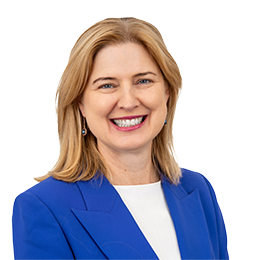
Interview with Nick Gill, ABC NSW Statewide Drive
7 April 2026
E&OE TRANSCRIPT
RADIO INTERVIEW
ABC NSW STATEWIDE DRIVE
TUESDAY, 7 APRIL 2026
SUBJECTS: Fertiliser and fuel for Australia’s farmers and producers
NICK GILL, HOST: Now, though, farmers across the state are warning of food shortages and price spikes. I mean, tell us something new at the moment with price spikes. But the Federal Government is now moving to shore up supplies of fertiliser during sowing season, particularly wheat. Julie Collins is the Federal Minister for Agriculture, Fisheries and Forestry and she joins me now. Good afternoon, Julie.
JULIE COLLINS, MINISTER FOR AGRICULTURE, FISHERIES AND FORESTRY: Good afternoon, Nick. And good afternoon to your listeners today.
GILL: Oh, thank you so much for your time. Let us know, what does the current supply of fertiliser look like for us?
COLLINS: So, in terms of discussions with industry, we're aware that we've got enough fertiliser in the country for the immediate sowing season on the water or on its way here. But it's further down the track where we're busy shoring up supplies, particularly in relation to urea. Around 60 per cent of urea was coming from the Middle East in terms of Australia's supplies. So, we are obviously talking to international partners and we're having conversations with industry and working through Export Finance Australia to do everything we can do to shore up as much supply, noting that a lot of Australian companies have long term contracts and some of them do have supplies. But this is a very complex distribution system for fertiliser. It's quite different to that of fuel.
GILL: And you said, yes, 60 per cent of it coming from the Middle East. Is there enough? We've been hearing that there's discussions with places like Indonesia to try and shore up our supplies. Is there enough across Asia to make up the difference in the short to medium term?
COLLINS: Well, obviously globally there is a fair amount that does come out of the Middle East. So, we are in discussions with other countries as you would expect us to be, trying to secure up supply as much as we can and trying to shield Australian farmers and Australians from as much of the impact as we can in terms of what is happening in the Middle East. Obviously it is impacting the globe. And our job as a government is to work with industry and work with Australians to shield Australians as much as possible. And that's what you're seeing us do. We've now got a fertiliser working group across government agencies, but importantly with industry and with farmers. They met on Thursday and they will be meeting weekly to work with the government about making sure that we're doing everything we can do to secure fertiliser.
GILL: Yeah, okay. And so the winter sowing season is upon us. For those with large stocks, what is kind of the lifespan of fertiliser for those people who are stocking up?
COLLINS: Well, I am advised that some people do have enough to get through to the end of the calendar year. And obviously, you know, as a government we're also looking at, you know, sovereign capability and Future Made in Australia and there is the Perdaman plant that comes on sort of around mid-year in terms of domestic urea supply. So, that will be up and running towards the middle of next year. But obviously we don't know how long this is going to go on for and what we're doing as a government is working with industry and with the sector to shore up as much supply as we can between now and then.
GILL: Yeah, okay. So, you had your first fertiliser task force meeting on Thursday. Can you remind us of the purpose of that task force and who's involved?
COLLINS: Well, it's Fertilizer Australia. It's my department, the Department of Industry, the Department of Foreign affairs and Trade and obviously representatives from Prime Minister and Cabinet but importantly National Farmers Federation and Fertilizer Australia as I said. And a lot of those fertiliser companies are having input into that so that we can get a clear indication of how much is being held by some of the organisations and companies in Australia in terms of long term contracted versus those who are relying on the spot market of fertiliser. So, it's really the spot market that's been disturbed and disrupted due to what is happening in the Middle East. So, it's how do we work together, work out what is required and then try and secure that supply.
GILL: And did that task force meeting come to any conclusion or outcomes?
COLLINS: So, they are working through Export Finance Australia. You may recall a weekend or so ago the Prime Minister and Minister Bowen announced Export Finance Australia would be able to not just help private companies in terms of underwriting and securing fuel, but also important inputs such as fertiliser.
GILL: Okay, and what's stopping us from manufacturing fertiliser locally?
COLLINS: Well, that's why we have been investing in the Perdaman and we can do some of that here in Australia. So, we're looking to do that and that'll be up and operational next year.
GILL: But like is that something that we've been doing and it's slowed down or like is there any reason why we haven't been able to manufacture that long?
COLLINS: I think well obviously this is a long term thing about making sure that we do have more national and sovereign capability here in Australia and what we're doing as a government is investing in doing more of that here and that's what you've seen in terms of the investment in Perdaman and bringing on urea supply here in Australia. So, we are working to do that. I'm told, in terms of other fertilisers, that the amount in Australia on the water is sufficient in terms of it's down, but not as down in terms of urea. Urea really is the issue here. And that's why we're working so hard to try and get that. So, there are other fertilisers manufactured in Australia that are not urea.
GILL: Yeah, okay. All right, well, Julie Collins, the Minister for Agriculture and Fisheries and Forestry, thank you so much for your time. We appreciate it today.
COLLINS: Thanks very much.