
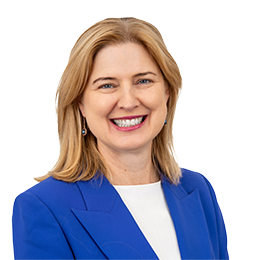
Interview with Kieran Gilbert, Sky News
29 January 2026
E&OE TRANSCRIPT
TELEVISION INTERVIEW
SKY NEWS NEWSDAY
THURSDAY, 29 JANUARY 2026
SUBJECTS: Support to prepare for H5 bird flu, Inflation figures, cost-of-living relief
KIERAN GILBERT, HOST: And we're going to stay in Tasmania now. And joining me live, we have the Agriculture, Fisheries and Forestry Minister. Julie Collins joins me, Minister, thanks for your time. I know you've just announced a major commitment to combat the latest strain of bird flu in relation to protecting our native species. How big a threat is this to some of our bird species, and what sort of things are the government doing to prevent the incursion of bird flu?
JULIE COLLINS, MINISTER FOR AGRICULTURE, FISHERIES AND FORESTRY: Thanks Kieran, and good morning to your viewers today. Certainly, the bird flu H5 strain we've seen across the globe has had devastating impacts on bird wildlife and also on some mammals. What we're doing as a Government is investing early, $100 million. Australia remains the only continent free of this H5 bird flu at the moment, and we're doing everything we can to prepare and protect some of those threatened species and some of those mammals. I'm here today at Raptor Refuge, where we're talking about the protection for the masked owl and for the Tasmanian eagle here behind me, the wedgetail eagle, which is a subspecies and is actually Australia's largest bird of prey. It's about improving biosecurity in areas where they're held and about making sure that we do everything we can to protect them, should this H5 strain bird flu come to Australia.
GILBERT: So, yeah, the H5 avian influenza, this strain, as you say, we're the only continent where it doesn't exist at the moment. Is it inevitable that it will arrive here? And from what you're saying, it sounds like the birds and those native species are trying to be protected in advance of an inevitability?
COLLINS: Certainly Kieran, what we're hearing from experts is that it will come by migratory birds. We can't stop it from coming. We're doing everything we can to prepare as early as we can, given we're the only continent that is free of it. It was, of course, sadly confirmed on Heard Island, which is Australian territory, but is around 4,000 kilometres southwest of Perth, Western Australia, down in the Antarctic region. It has been confirmed there, and they've seen some dead seals down there on Heard Island. As a country, what we're trying to do here is we're trying to get ahead of it. We're trying to protect as many of our threatened species as we can by improving biosecurity where some of these animals are held, particularly in some of our zoos and aquariums. There’s around $5 million. This is the second round, and I'm here at one of the 21 facilities across the country where we are doing that investment with those operators of those facilities to protect those threatened species. We have seen some devastating consequences overseas. Some countries are spending billions of dollars trying to clean up what has occurred from the bird flu. This is about getting ahead of it. As I've said, I don't think we can stop it from coming, but what we can do is be as prepared as we possibly can, and that's what our investment is about.
GILBERT: What do your experts in the Government tell you about the risk of a mutation of this? At the moment, it's only if humans are to contract it, it's from bird to human. I guess the worst case scenario would be if it mutates human to human, how big a risk is that?
COLLINS: We are hearing that there have been some cases that they suspect may be overseas, and there is a vaccine. We're obviously, as a country, making sure that we're prepared in terms of human vaccines. We're also testing and trialling vaccines in some of our threatened species, and whether that's going to be possible or not with some of the advanced funding. We're also providing funding to states and territories in terms of early testing. And my big advice to the public, Kieran, would really be if you see a lot of dead birds, please do not touch them. Go to birdflu.gov.au and report them so that we can test them. We'll continue to work with the public, and on the messaging around this, but it is really important that people do not touch dead birds.
GILBERT: Onto the likelihood of interest rate rises, do you accept this is going to be devastating for many mortgage holders and that the Government needs to accept accountability, given the highest levels of Government spending outside of COVID for four decades?
COLLINS: Well, Kieran, we of course understand that cost of living is impacting so many Australians, which is why we've got our cost of living relief, which is why we've been investing in things like cheaper medicines, cheaper childcare, relief of HECS debt. Working with the community and providing relief where we can in terms of cost of living. We've also, as a Government, taken measures to reduce spending, and we found another $20 billion of savings in MYEFO. Since we've come to Government, now over $110 billion, I understand, in savings that we have found. And of course, when we came to office, we know that inflation was over 6 per cent and was rising rapidly, and of course, it is significantly lower than that at the moment.
GILBERT: The Treasurer claims credit for when there are rate cuts and, you know, falling inflation. He can't really claim credit on the one hand and then not take the blame on the other, can he, in terms of when inflation is rising again, and we're going to cop at least one, if not more, rate rises?
COLLINS: What we do, Kieran, is we explain the actions that we're taking as a Government to the people, and we are doing that. We've done that before in terms of the savings that we've done, and whereby we of course, have banked the vast majority of those savings. Where we're providing cost of living relief, understanding that households are under pressure.
GILBERT: And clearly more needs to be done in terms of Government spending and reining it in, doesn't it, in the current inflationary environment?
COLLINS: As the Treasurer explained yesterday, we've also seen private capital increase as well across the community. What our job as a Government to do is to make sure that we continue to spend the Australian taxpayer dollar in the best possible way. To make sure that we are finding those savings wherever possible, and to make sure that we put downward pressure on inflation as a Government, and that's what we've been doing since we came to office, Kieran.
GILBERT: Minister, thanks for your time. Thanks for joining us from Tassie today.