
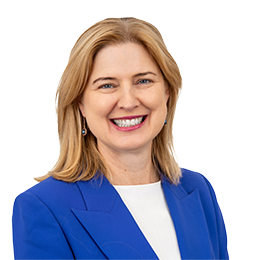
Interview with Andy Taylor, Karen McMullen, Triple M Hobart
13 May 2026
E&OE TRANSCRIPT
RADIO INTERVIEW
TRIPLE M HOBART
WEDNESDAY, 13 MAY 2026
SUBJECTS: 2026 Budget
ANDY TAYLOR, HOST: The Federal Budget was handed down last night and Julie Collins is the Federal Labor Member for Franklin and Minister of Agriculture, Fisheries and Forestry, and she joins us live. Good morning, Minister.
JULIE COLLINS, MINISTER FOR AGRICULTURE, FISHERIES AND FORESTRY: Good morning. And to your listeners, good morning.
TAYLOR: Last night, we heard the Treasurer say that this was an important and ambitious Budget for Australia. What is the aim of the new Federal Budget?
COLLINS: Well, it really is about resilience, our Budget, and it's about preparing us for dealing with the current situation in terms of the Middle East. But it's also about making sure, over the long term, that our Budget is sustainable. And it's also providing cost-of-living relief for so many Australians, particularly with the tax cuts.
TAYLOR: There's been some major changes to capital gains tax and negative gearing. Minister, why have those changes come about?
COLLINS: Well, we've obviously taken a tough decision, and we've changed our position and we've made a tough decision to make it more easy for first home buyers to get into the housing market with some of the changes that we're making around some of the tax reforms.
KAREN MCMULLEN, HOST: So, the Prime Minister back in April 2025 said this:
[Excerpt]
SPEAKER: Can you rule out any changes to negative gearing and capital gains tax?
PRIME MINISTER ANTHONY ALBANESE: Yes. How hard is it? For the 50th time.
[Excerpt ends]
MCMULLEN: Can we trust him?
COLLINS: Yeah. Well, what we want to do, obviously, is to get more young people into their first home, and that's what we are doing. And certainly, the negative gearing is still available for new homes, and that will actually boost construction of more new homes. So, this is about giving everybody equal aspiration, particularly young people trying to get into the housing market.
TAYLOR: Minister, what's in this Budget for Tasmanians?
COLLINS: Well, Tasmanians would be aware that around 70 per cent, or almost 70 per cent, of the entire Tasmanian state budget is funded by the federal taxpayer. And this Budget is no different with record funding for health and hospitals, record funding for education, infrastructure, all of those things that the Federal Government does provide the Tasmanian State Government with. So, you know, for instance, almost a billion dollars this year for hospital funding and health funding is very significant, and $900 million for education. So, there's lots in there for Tasmania, as there always is.
TAYLOR: I noticed that there's a $47 million input for the next three years for upgrades to Mac Wharf 6, the Port of Hobart. Is that included in the Macquarie Point development?
COLLINS: No, that is part of the agreement we have with the state government in terms of the Macquarie Point. But this is additional money to do with the Nuyina and to upgrading that infrastructure on the wharf to be able to fuel the Nuyina in Hobart.
TAYLOR: That is fantastic news. I know that's been a little bit of an issue, Julie Collins, for the Nuyina to get fuel into its tanks.
COLLINS: It is, it's taking much longer than I think any of us ever hoped, but certainly we did a deal with the Tasmanian Government where we have provided additional funding for them to be able to do that.
TAYLOR: What about environment and energy, Julie Collins?
COLLINS: Well, obviously, what you've seen from our government is record investments in sustainability and bringing down emissions. And you know, we've also, you know, got the batteries, the cheaper batteries we've got, you know, the tax discount for EVs will continue on in a more sustainable way. So, there's lots there in terms of making sure that Tasmania continues to play our role. And there's also the funding, importantly, for the Marinus Link, which, of course, is about making sure that Australia meets net zero by 2050.
MCMULLEN: Yeah, we're all stretched, Minister. We don't have any, any money left over week-to-week. What will we notice first, what's the biggest change in my average pay packet living out in Moonah? What's the best thing?
COLLINS: Well, there's more money for cheaper medicines for those people who rely a lot on medications in terms of the Pharmaceutical Benefits Scheme. There's the ongoing funding, so making permanent Urgent Care Clinics in Medicare, which I think is really important, given we've now got eight in Tasmania, and so many people rely on that. Certainly, you would already be seeing some, and I know it doesn't feel like it, but relief in terms of the bowser with the reduction in the fuel excise. Which, of course, we announced and has come into effect already, but that was also in the Budget. And then of course there's tax cuts coming on top of the other tax cuts and then from 2027 there's the new Working Australians Tax Offset so they will benefit, we expect somewhere between 140,000 to 170,000 Tasmanians with those.
TAYLOR: Julie Collins, the Minister for Agriculture, Fisheries and Forestry, it is great to chat to you. We know that budgeting and your own household budget is difficult. I can't imagine what it's like for Jim Chalmers, Anthony Albanese and yourself and the entire moment. We appreciate you taking the time to chat to us on Triple M.
COLLINS: Thanks very much.