
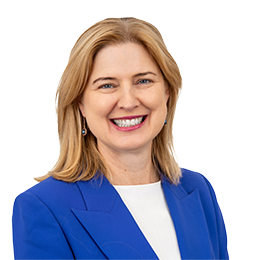
Interview with Warwick Long, ABC Country Hour
13 February 2026
E&OE TRANSCRIPT
RADIO INTERVIEW
ABC VICTORIAN COUNTRY HOUR
FRIDAY, 13 FEBRUARY 2026
SUBJECTS: Visits to communities impacted by severe weather; illegal logging; Coalition chaos.
WARWICK LONG, HOST: Welcome to the Country Hour. Where do we find you today?
JULIE COLLINS, MINISTER FOR AGRICULTURE, FISHERIES AND FORESTRY: Thanks, Warwick. It's terrific. I'm going to go and visit Harcourt today and meet there with the Cool Store people that got burnt out, unfortunately, during the bushfires. I've been invited by the local member, Lisa Chesters, to come and have a bit of a visit with her post-bushfires. And we certainly like to do that as a Minister, I like to go around after the natural disaster, sort of, you know, a couple of weeks, even months sometimes, after the initial response, to make sure that people realise we haven't forgotten about them.
LONG: As a Minister, an Agriculture Minister, in terms of effects on primary industry, there's been a lot of natural disasters over this summer period for you to get around to, whether that be extensive bushfires across Victoria or in other states, or floods and cyclones and storms up north.
COLLINS: Yeah, and it's really important next week, I think I indicated I'm also going to go into Queensland, post some of the floods and the impact there as well, and I obviously did that last year as well. It's really important, I think, that we do hear from the primary producers, you know, firsthand about how the recovery's going and what's happening for them. And obviously, as the Federal Government, in terms of working with the Victorian Government, jointly now there's over $300 million that's been provided in support post-bushfires to help with the recovery. So I want to see and hear about how that's actually working on the ground, including those grants and loans for primary producers.
LONG: And in Harcourt today, a major announcement for the Cool Store area that was damaged significantly in those fires.
COLLINS: That's right. We'll be providing jointly with the Victorian Government $500,000 to make sure that that helps in terms of the rebuild of the facility, because we know that this was important to local producers and, of course, local small businesses who were part of that Cool Store. So, we know that it was really important. I'm also going to go and visit Henry of Harcourt, and I'm also going to meet with the Mount Alexander Shire Council to talk about the long-term recovery strategy and what that looks like on the ground.
LONG: Is this a one-off type investment, or is this a program to try and rebuild agricultural infrastructure after damage?
COLLINS: Well, this is part of the natural disaster recovery arrangement, so it is jointly funded with state governments. As you're probably aware, we actually respond to state governments. State governments trigger this. There is a review underway of what does that look like. And obviously, we've also been investing early in terms of resilience with the Disaster Ready Fund as well, to make sure that we support communities prepare better for natural disasters as well.
LONG: And you're in Harcourt today, significant bushfires affected Victoria in other places like Longwood, Cobram, Walwa, I almost could go on with this list as well. Certainly through Western Victoria too. Do you plan on coming to some other areas affected by bushfire over the coming months?
COLLINS: Well, certainly, Warwick, I do like to get out and about post natural disasters and talk to people. So, I'll do my best to work with local members and find times to visit people. But certainly we understand that recovery is not just in weeks, but it is in months and sometimes years in these regions. You know, I've obviously, being Tasmanian, had areas, in our local areas that have also been impacted, and I've seen, you know, it can take years to recover from some of these disasters. So, it's about making sure that local communities understand that we're with them the whole way.
LONG: And just on a couple of issues, if I may, Agriculture Minister Julie Collins with you on the Country today. This one very much fire-related. You've been in Victoria a few times now to look at drought conditions in Victoria affecting farmers over the last few years. There's already forecasts of a fast-developing El Nino which is possible as well. Are you keeping an eye on that situation? Are there concerns, at the government level, we may head back into drought?
COLLINS: Well, certainly we are keeping an eye on that. And as you rightly point out, Warwick, I have visited both Victoria and South Australia and areas impacted by drought over the last few years and certainly, I think the rainfall has been welcomed in those areas. But we're always keeping our eye out and listening to local communities about that impact. And certainly, you know, as a Federal Government, we do get updates in terms of NEMA, the national emergency agency and from the forecasters at the weather bureau about what the seasons are going to look like and what we should prepare for each of those seasons. But it is the weather and, you know, it does change, and so we'll obviously respond with other tiers of government when those things are impacting people too.
LONG: We have a story today with consumer group Choice and the timber industry, both saying consumers, an overwhelming majority of consumers, want better country of origin labelling on timber, and they say it will help them make decisions on the kinds of things they buy, particularly with concerns around illegal timber coming into Australia. Is that something the government's prepared to look at?
COLLINS: Well, what we have done to date is we've actually strengthened our illegal logging legislation to restrict imports to try and make sure that we don't have illegal logged timber coming into our nation. What we know, Warwick, of course, is that we don't have enough timber in Australia, so we do rely on some imports, so we want to make sure that those imports are coming from sustainably sourced forestry operations. We also know, of course, that our industry in Australia is sustainably sourced, and we've also got to get better utilisation of our existing timber resources in Australia. We have invested around $300 million with industry in a whole range of things to date, including more plantations, to make sure that we have more timber available in Australia. We've also just announced recently another $300 million, which will work with industry in terms of better utilisation of our existing timber resource to make sure that we're getting the highest possible utilisation of that timber resource here in Australia and adding value here in Australia for the products that Australians need and want.
LONG: The missing piece there, though in terms of what you're talking about, the missing piece there is consumers having the ability to decide for themselves, though, isn't it? Is that where country of origin labelling would help?
COLLINS: It could, but certainly I'm willing to have those discussions with industry, and I'm aware of that report. But I think primarily the point is that we don't have enough timber at the moment. And certainly, talking to some of the bigger providers of that timber and retailers that are importing that, they all tell me that the most important thing for people is price at this point in time. I think what we need to do is make sure that we have more product available, and that's about making sure that we have a sustainable industry here in Australia that can provide better and more products.
LONG: And just before I let you go, while I'm speaking to you, Agriculture Minister Julie Collins, your colleagues from across the aisle in Parliament are meeting in Canberra to elect Angus Taylor as the new Liberal Party leader. Does that have any great impact on your work as Agriculture Minister?
COLLINS: Well, Warwick, while they continue to talk about themselves, I'm obviously out and about talking to people who have been impacted by natural disasters, and the work of our government continues. We're focused on the people of Australia and supporting the people of Australia, and I'll leave it up to the Liberal Party members to discuss whether or not their leadership changes anything. Certainly, I think most Australians are pretty disinterested in it and would rather we got on and did our job.
LONG: Minister Julie Collins, thanks for your time on the Country Hour.
COLLINS: Thanks very much.