
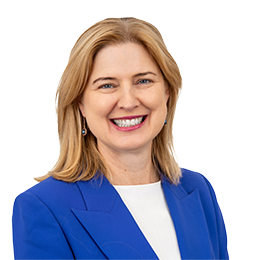
Interview with Warwick Long, ABC Country Hour
17 February 2026
E&OE TRANSCRIPT
RADIO INTERVIEW
ABC VICTORIAN COUNTRY HOUR
TUESDAY, 17 FEBRUARY 2026
SUBJECT/S: Investment in agriculture innovation; AU-EU FTA; grains levy; ACCC case against Coles; National Food Security Strategy.
WARWICK LONG, HOST: Before we get there, let's go to the Federal Agriculture Minister, who has been here this morning pledging another $450,000 to this event so it continues. And I started by asking the Agriculture Minister, Julie Collins, about that investment and what she plans with it.
JULIE COLLINS, MINISTER FOR AGRICULTURE, FISHERIES AND FORESTRY: We know that agriculture's one of Australia's most productive industries. What we want to do is to make sure that that's the case going forward and to support, you know, the adaption with the changing climate, the geopolitical context, to make sure that our farmers are able to continually adapt and EvokeAG is really about, you know, those start ups, those next lot of tech that's coming, the innovation, but importantly, it's also about the on ground adaption for our farmers and making it as easy as possible for farmers who are busy doing their day job to know what else is available and how they might utilise it.
LONG: And you announced more, money for this event as part of this announcement today, $450,000. Not as much as what your Government gives to beef in Rockhampton or even lamb as well. And AgriFutures is your organisation. Is there a reason for that?
COLLINS: Well, obviously $450,000 is a substantial amount of money, and you know, we make decisions all of the time in relation to supporting, you know, a whole range of events. Some of the other events that you talk about are really significant trade industries that do provide large income for Australia and our economic capability, and obviously showcase our farmers globally, and some of those industries are very significant, particularly our beef and our sheep industries.
LONG: And I've got a number of other issues to talk to you about, but before we get there, we're right next to Start Up Alley. There's a lot of talk about the future of agriculture. Australia is not seen as a good place for a start up compared to other parts of the world; some businesses go elsewhere to try and get government money and then bring their products back here. How do you change that, and is that your role, or is that an innovation Minister or a Trade Minister, or someone else's job?
COLLINS: Well, it's all of the above, Warwick, it's the Government's job, and we've got obviously our Minister for Innovation and Industry, Tim Ayres, and also our Assistant Minister Andrew Charlton doing a lot of work in terms, you know, AI, but also technology and our research investments across Australia from government. But also importantly how we leverage that from industry, the private sector and our institutions. What we want is public good research, but we also need industry specific research, and agriculture, as I said, is one of our most productive industries. We now put around half a billion dollars a year supporting grower levies in terms of our research and development corporations, and obviously you know, we had to make sure that ongoing that that provides a continuing return for the Australian taxpayer as well as industry.
LONG: You're listening to the Country Hour live at EvokeAg, and Minister for Agriculture Julie Collins is here with you on the program today. Minister, a lot of reporting, not just in agriculture media, but national media now is looking at this EU Australia trade deal as the world looks to strengthen Trade Agreements outside of the existing pacts with areas like the US to shore up supply, it's seen as a good moment for Australia to finally get an EU deal done that your Government walked away from because it wasn't a good deal earlier. Are we going to get a good deal this time with the EU?
COLLINS: Well obviously as we’ve seen we have had some progress, we're still having those discussions, but can I say that both our Prime Minister, our Trade Minister and myself as Ag Minister have said we do need a better deal for ag than we got last time. I'm certainly out there and internally advocating for a strong deal for ag. What I want to do is make sure that this deal's in Australia's best interests right across the board, but as well as our agriculture industry.
LONG: So there's a lot of talk from the meat industry about what quotas might be, rural press is saying the Prime Minister's going to make a captain's call on that. Is he listening to you about agriculture and does he have his ear to the ground with what agriculture
COLLINS: Well, the Prime Minister himself I think has been pretty open, and has said publicly that we do need a better deal particularly for our red meat industry. So rest assured that the Government is on the side of Australian agriculture, but also, of course, with the current geopolitical trade and the displacements that are occurring, we also have been diversifying Australia's agriculture trade, and it's now the most diversified it has ever been, and we're exporting tens of billions of dollars each and every year, and our farmers and our economy is benefitting from that.
LONG: But the dairy industry already feels like it's been sold out on this deal, so much more is coming from the EU to Australia already, and they think under a deal your government signs it's going to get worse. Should they be worried?
COLLINS: Well, what I can say is that we continue to advocate for the best interests of Australian ag, we're continuing discussions as we've seen and heard where there has been some progress, we'll continue to update the public as those moments evolve.
LONG: Does dairy get traded away for a better deal for beef, for example?
COLLINS: What I want to see is across the board Australian agriculture do better.
LONG: Julie Collins is with you, Agriculture Minister for Australia. Before I leave you on the EU chat, are we still going to be able to drink Prosecco and eat Australian Parmesan at the end of all of this?
COLLINS: I certainly hope so, they're great Australian products, and certainly those discussions, as I said, continue with the EU.
LONG: Because if those changes had to be made, if we lost those things, that would cost a lot of money for Australian industry to rebrand, wouldn't it?
COLLINS: As I said to you, Warwick, repeatedly, and I don't know how much clearer I can say it, I'm on the side of Australian ag and the Government's on the side of Australian ag, and we want a deal that's in the nation's best interests, but also gives us a better deal than we walked away from last time.
LONG: That wasn't my question though, Minister. It was really about if those things go?
COLLINS: I'm sure, Warwick, you know, people want the detail of it, but we'll announce the detail, if we get to deal, in good time. We need to have these discussions and we need to continue to have the discussions.
LONG: Minister, there's a lot of talk about grains levies at the moment, Grain Producers Australia, one of the lobby groups around the grains industry, they wanted to make the levies industry participants, Grain Growers pay lower because they think there's so much money in the bank already. You as Minister said no to that plan. Why?
COLLINS: What I've asked for is both GPA and the Grain Growers to work together and to come up with a business case in terms of levy reduction. What I've said is that I don't have enough evidence before me at the moment in terms of reducing that levy.
LONG: Because there's two grains bodies.
COLLINS: That's right.
LONG: So do you need them to agree before you do something?
COLLINS: I need them to work together to come up with a business case around the levy and I need them to, across the board, have discussions with their growers.
LONG: So you're not against the idea of reducing the levy eventually, but all of industry needs to come together?
COLLINS: I've been pretty clear that I do expect all of industry to work together in terms of the grain industry, yes.
LONG: And Minister, a pretty major court case is going on, that does involve farmers in some way, the ACCC case with Coles supermarkets at the moment, a lot of the talk is about how supermarkets discount. Farmers are sort of involved in it in a different way; they want money for their produce, but people stop buying their products if it goes up too much in price as well. As Agriculture Minister, are you watching the results of this?
COLLINS: Of course, and as a government obviously we did put in the Food and Grocery Code. We have also given the ACCC additional money, we have also of course provided CHOICE with money to do a basket of goods, and importantly, and I also talked today about our food security strategy, what we want to do is too far a look at our food supply system from the inputs to food production all the way through the supply chain to the end consumer, we want to make sure that there's downward pressure on prices for consumers, but we also want to make sure there's a fair deal across that supply chain, including for our farmers.
LONG: And then as Agriculture Minister, in terms of the food security plan, things like the supply of diesel, the supply of fertiliser, the inputs we need to produce the food we grow.
COLLINS: Yeah, we're going to have a look at it right along the supply chain, including inputs into production, including manufacturing, but particularly for those every day products that all Australians need in terms of Australian food security, and importantly, as I said, we're a major exporter, so also particularly, you know, some of our exports, and making sure now that we're feeding parts of the globe that we're going to be able to continue to do that. We've also seen, you know, the impact of climate change, the impact of biosecurity, more people movement, more goods movement, and about how we might mitigate some of that going forward too. I mean we obviously have a really strong biosecurity system, but there are some things we can't stop from happening. The H5 bird flu is one, obviously our Government's invested early to try and protect Australia as much as we can, but we know that that will come from migratory birds and we can't stop it completely. So we're looking right across the system in terms of our food system.
LONG: That's Agriculture Minister, Julie Collins, joining me at EvokeAG.