
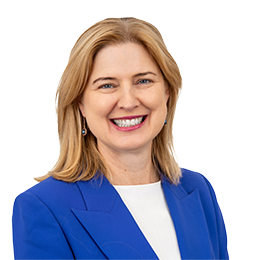
Interview with Leon Compton, ABC Tasmania Statewide Mornings
14 May 2026
E&OE TRANSCRIPT
RADIO INTERVIEW
ABC TASMANIA STATEWIDE MORNINGS
THURSDAY, 14 MAY 2026
SUBJECTS: Private health insurance; 2026 Budget; Forestry; NDIS; local infrastructure
LEON COMPTON, HOST: It is, indeed, the sell's now on, of course, selling changes that are made, some of them quite significant to the treatment of property and capital gains and family trusts, amongst other things, changes proposed to the National Disability Insurance Scheme. The sell's on to the public of Australia, but also to those in Parliament that might be called upon to vote yay or nay in favour or against these changes. Julie Collins is Labor Member for Franklin, Minister for Agriculture, Fisheries and Forestry. Minister, good morning to you.
JULIE COLLINS, MINISTER FOR AGRICULTURE, FISHERIES AND FORESTRY: Good morning, Leon, and good morning to your listeners today.
COMPTON: Minister, before we get started, you announced before the Budget there would be changes to the treatment of the private health insurance costs for over 65s. That has been a huge issue for our audience, and I want to play you some of what our listeners have told us about what those changes, if you push ahead with them, will mean.
[Excerpt]
SPEAKER: I'm nearly 80 years old. I've been in healthcare since I was 16. I simply can't afford that anymore, I've got to give it up, I've been struggling to keep it.
SPEAKER: Oh, hi. I wouldn't be able to afford it either, I'll just have to cancel.
SPEAKER: And I would go without food or fuel in my car to keep it, I still wouldn't stop it because it's so important.
SPEAKER: I will have to cancel the private health, um, because it's over $200 a month now. This is just too, too hard.
SPEAKER: But in the last two years, I've had a really sick husband. If it hadn't been for private health, we would never, ever have been able to access diagnostic services that we did. There has to be a better solution.
[End of Excerpt]
COMPTON: That's some of what our audience has told us in the days since your party first announced these changes, Julie Collins. I do want to also mention that George called us yesterday and said he's an older Tasmanian who will be affected by supports the changes, so there was another voice. How can you hear the voices of those women and push ahead with changes to charging more for over 65s on private health?
COLLINS: Well, what this is about, Leon, is about everybody having the same private health insurance rebate, and older Australians, like all Australians, will continue to receive a rebate of between 8 per cent to 24 per cent, depending on their income, so this is about everybody having the same rebate. Importantly too, what it allows us to do is to invest more in aged care, so more aged care beds, more home support programs, and plans for people. So this is about, I guess, governments making tough decisions as we need to in terms of making sure that we put downward pressure on inflation, because we know that that does impact the entire economy and so many Tasmanians.
COMPTON: And yet even on your own figures, Minister, 44,000 older Australians might quit private health insurance because of the stress this change would put on them. It seems many of them would be Tasmanians.
COLLINS: As I said, Leon, this is about everybody having the same rebate and everybody will continue to receive the rebate, 8 per cent to 24 per cent depending on their income, and regardless of their age. So this is about making sure that we make the decisions that need to be made and that we invest where we need to invest. You know, in terms of aged care, we certainly need more aged care beds, and we certainly need more aged care packages to make sure people can get the support at home that they need.
COMPTON: 936 ABC Hobart, ABC Northern Tasmania. All states and territories are different in their own way. Julie Collins, what is your expectation of what your announced changes to capital gains tax treatment to negative gearing will mean for Tasmania?
COLLINS: Well, what we hope over the longer term, Leon, is that it gets more first home buyers into their first home, and that's certainly what our changes are about. What you've seen from us as a Federal Government is really significant investments right across the country, but also in Tasmania in terms of getting more supply of housing on the ground, but as we have been doing that, there is still entrenched disadvantage, particularly for those first home buyers, and this is about levelling the playing field so first time buyers actually have a shot when things come up and are able to purchase a new home.
COMPTON: It's also an expectation there might be fewer rental properties available in the short to medium term while these changes wash through. What could that mean for the Tasmanian rental market, which is already tight?
COLLINS: Well, what we know is we need more homes in Tasmania, Leon, and what we also know is that we have invested since we've come to office now just in Tasmania as a Federal Government around $860 million into new housing. We've also supported more than 3,500 Tasmanians into their first home with the 5 per cent deposit. We're going to do everything that we can do as a Federal Government, obviously recognising that the State Governments also have a really significant role to play here to get more homes on the ground of every type for Tasmanians.
COMPTON: Mornings Around Tasmania, I'm loving the questions coming in. My guest is Julie Collins, Minister for Agriculture, Fisheries and Forestry. I might run through them. Minister, will Labor build more oil refineries to make us self reliant, and will they tax gas exporters, asked Macca this morning via text. I heard a non or a discussion about a criticism about how further taxing of gas exporters hasn't happened in this budget. Is it on the way, and will we have more refineries?
COLLINS: Well, we're obviously investing, and there was an announcement last week, Leon, of around $10 billion, $7.5 billion which will go into a Fuel and Fertiliser Security Facility, and this will help secure fuel and fertiliser in terms of making sure that Australia is more reliant into the future, and obviously we'll have our Government owned domestic reserve there of a billion litres. So this is really significant about making sure that we are more resilient into the future when it comes to fuels. We're also importantly investing more in low carbon liquid fuels, and that announcement over a billion dollars, to also help Australia be more sustainable, and we are working with industry about whether or not that could be refined in Australia. So certainly we're looking at every option to make Australia more resilient into the future when it comes to fuels of every type.
COMPTON: Jenny Weber has sent us a text from the Bob Brown Foundation. You all know Jenny Weber and her work well. Minister, you're the Minister for Forestry. My question for Julie Collins, will native forest logging continue after the RFA exemption is removed?
COLLINS: Well, what our changes to the EPBC Act were about, Leon, was about bringing forestry into the same environmental laws as everybody else. I have every confidence that the forest practices in Tasmania will meet the new environmental standards, and that logging of all types will continue in Tasmania. Any decision around other things will be decisions for Tasmanian State Government.
COMPTON: A listener says via text, and this is on the fact that your party, indeed you in campaigning in the lead up to the last election repeatedly said there wouldn't be changes to negative gearing. "Please ask the Minister why the PM repeatedly lied to electors before the last election saying there'd be no changes to super, capital gains tax and negative gearing". Minister?
COLLINS: Well, I don't agree with obviously the inference of that question in its totality there, Leon. What I would say is we've been pretty upfront that we have changed our view when it comes to things like negative gearing and capital gains tax, and the reason that we've changed our mind is we have been investing and focusing on supply, which is still the main game and where all of our investments are, including in this Budget an additional $50 million that Tasmania will be eligible for infrastructure, but we also realise that it is becoming harder and harder for people to get into the housing market and this is about giving everybody, particularly the next generation, a shot at their first home and that's what it's about.
COMPTON: 936 ABC Hobart, ABC Northern Tasmania. Julie Collins is our guest this morning. Minister, you've made a lot of announcements about the need to rein in the growth and expenditure on the National Disability Insurance Scheme. I want to play you a little bit of Emma Bennison, who is a widely respected disability services advocate, talking with us yesterday on Mornings.
[Excerpt]
EMMA BENNISON: The previous system that we had prior to the NDIS which was, you know, funded by the States, was inadequate.
[End of Excerpt]
COMPTON: That was the previous system, the system we have now is expected to need savings, or you've announced findings of savings of almost $40 billion over four years and 160,000 Australians will have to leave the scheme over the next four years. What will that mean for Tasmanians that are reliant on the NDIS, Minister?
COLLINS: Well, obviously, Leon, Labor did build the NDIS together with disability advocates and people living with disability. We worked with them when we built the scheme. What we've seen since that time is cost blow outs in the scheme, and what we want to do is actually slow the growth. So when people talk about cuts, what we are actually doing is slowing the growth. The NDIS will continue to grow, let's be clear about that, and people with severe disability and living with disability will continue to receive the supports that they need. But what we are going to do is we are going to start Thriving Kids with the states and territories to actually get young children particularly into early services, and it would be easier for them to get into those services and less hoops to jump through because they won't have to get on to the NDIS to be able to get the services that they need, and
COMPTON: And yet, Minister
COLLINS: in this budget you've seen provision for Thriving Kids.
COMPTON: the issue here is that I think a lot of people on the NDIS have little confidence that the state will make a commitment to picking up the pieces and the financial responsibility for those that have shifted into their, the state's care.
COLLINS: Well, we've obviously provided the states with significant funding in terms of those programs, but, you know, what we're focused on, Leon, and we've been really clear, is we're fighting the fraud and the rorts. We want to slow down those increases, we want clearer eligibility requirements, and we want to make sure that it's sustainable in the future and continues to deliver quality services for people that are relying on them, and that's what the NDIS is all about. What we've got to do is make sure it's sustainable into the future in terms of the Budget, but it is growing at a rate where it will take over the PBS and the amount of funding that we're spending on hospitals.
COMPTON: 936 ABC Hobart, ABC North Tas. Minister Julie Collins, our guest this morning. Here's a local one, and I think it sits in the unusually shaped Franklin. "Minister, could Julie please advise why the Mornington roundabout project has stalled so significantly?" A local infrastructure question, and on most days at this time there will be traffic coming in and delayed there because of the way it's been, I suppose, under resourced for the traffic it gets in 2026. Minister, what's your take on this?
COLLINS: Absolutely, Leon. I have, as you have known, have got funding for this roundabout upgrade and we are relying on the State Government and the Council in terms of getting changes to that area and to get some relief for people who need to access the roundabout, and certainly $100 million is on the table, $80 million from the feds and 20 from the state. I have been asking those questions myself in relation to the State Government and have written to them several times. I have also raised the issue with the local mayor. What I want to see is progress and it happen quickly, and I'm confident that the funding is there and available for these upgrades to occur to this intersection and to other ramps off the Tasman Highway to actually improve and to lessen the reliance on that roundabout as well. So it's quite a large project and I want to see it progress as quickly as possible, and I'll continue to put pressure on the State Government and the Council to get it done.
COMPTON: 936 ABC Hobart, ABC North Tas. Thank you, listeners, for the questions this morning. Steve in Launceston, "Why is $100 million being cut from pest control measures, when we know the flow on costs for farmers and the environment can be so significant", says Steve in Launceston this morning, Minister.
COLLINS: Well, I assume Steve is referring to the article in The Mercury there, Leon. What I would say is that the funding from my department in terms of management of incursions and pests is, as it has, we are not cutting any programs. What they may be referring to are some programs that are in Minister Watt's area, and those programs have been funded for a further two years. Understanding, of course, that the main responsibility in terms of pests and incursions rests with State Governments and land managers, and what we have been doing as a Federal Government is working with State Governments and land managers, and we continue to do that, Leon.
COMPTON: Always good to have your company this morning. Julie Collins is our guest. If you've got a question, get in touch. Minister, just hold on there, if you wouldn't mind, one moment. I know it's another Parliament day. Anna's in North Hobart. Anna, good morning to you.
ANNA: Good morning Leon, good morning Minister.
COMPTON: Anna, what do you want to know from Minister Julie Collins?
ANNA: I'd like to ask Minister Collins around the changes with the NDIS. I'd firstly like to say that I'm a participant of NDIS, I work full time in a pretty senior role, the support I receive from the NDIS keeps me working and contributing to the economy. The thing that I found really perplexing is I provide a functional capacity report to the NDIS, things are items are approved, specific disability supports such as shower stools, that type of thing, they're named up in my plan as an appropriately funded item, yet every time I go to make the 100, $150 purchase, I have to obtain another letter from a physio or an OT at a cost of about $400 to the NDIS in order to justify the purchase.
COMPTON: So you've got and does that come out of your package, or is that
ANNA: Yeah.
COMPTON: or is that a separate 400 you've got to find, Anna?
ANNA: Yes. No, it comes out of the package, but to me it seems bizarre. I've paid 15 or the NDIS has paid $1,500 for the report in the first place, and then they have to pay another $400
COMPTON: It sounds, Anna, like you might have found some efficiencies there potentially. Look, let's throw it over to Julie Collins. It's not her bailiwick.
COLLINS: [Indistinct] Anna.
COMPTON: Julie, sorry, we've got you there, Minister. Yep. What would you say in response?
COLLINS: Yeah, so what I would say so to Anna is it does indeed sound like that is some of the efficiencies that we could do with in the NDIS, but what I'm happy to do is if your producer can get Anna's details is take up her situation personally with the Minister on her behalf and see if we can't find a way to resolve that, Leon.
COMPTON: Minister, always good to chat. Thanks for being part of Mornings this morning.