
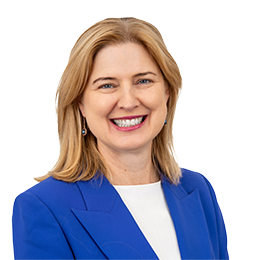
Interview with Kieran Gilbert, Sky News
18 February 2026
E&OE TRANSCRIPT
TELEVISION INTERVIEW
SKY NEWS NEWSDAY
WEDNESDAY, 18 FEBRUARY 2026
SUBJECT/S: ISIS Foreign Fighters' Wives; Communities impacted by severe weather
KIERAN GILBERT, HOST: Welcome back to the program. Let's go live to the Minister for Agriculture, Fisheries and Forestry, Julie Collins from Clermont in Queensland. Julie Collins, I know you're there providing flood support to farmers. I will ask you about that in a moment, but just to pick up what Jonno Duniam was saying to me a few moments ago, the Shadow Home Affairs Minister, he doesn't think the government's serious about protecting the Australian community when it comes to the ISIS brides. What do you say to him on that? And can you see why a lot of the community are worried about bringing that cohort back, particularly given at least three of them have security concerns over their heads, at least three.
JULIE COLLINS, MINISTER FOR AGRICULTURE, FISHERIES AND FORESTRY: Obviously, the Prime Minister and the government's been pretty clear. The Minister for Home Affairs has been pretty clear. If any of them have been found to have been breaking the law, they will face the full force of the law. And so, you know, this is just the Coalition, I guess, trying to cause a bit of chaos and division given what's been going on in their party over the last few weeks. But certainly, as a government, we're pretty focused, and we remain focused on making sure that we protect Australians.
GILBERT: Do we need, as a nation, though, and I'm sure you have people saying this to you, that you need to be careful about bringing problems into the country, given the challenges we already have, in a security sense, that bringing people like this cohort in is a risk we don't need to take?
COLLINS: Well, obviously, you know, it depends on whether or not they're actually Australian citizens, Kieran. I would say, and whether, you know, they are coming back to Australia as Australian citizens and what we legally can and can't do. But our government has been pretty strong that if people have been found to be breaking the law or, you know, we'll be listening to the experts and the advice that we're given as a government, as we should be, and go about this in a careful and considered way, and listening to those security experts and those assessments and our experts that do this thing all the time.
GILBERT: And just finally, on that issue, when you look at the immigration debate, do you also, given the events of the last few months, the atrocity perpetrated on our Jewish community, do we need to be more aware about importing a problem like from Gaza, where people have been taught from an early age to hate Jews, do we need to be more aware of that and block that from happening?
COLLINS: I think our Prime Minister has been very clear there, too, Kieran. What we want to see is the tone turned down, what we want to see is respect and kindness for everybody here in Australia. And certainly, you know, as a government, we have been cracking down on the migration that we inherited and in certainly the numbers that we inherited, you know, net migration has been cut significantly since we've been in government. And we also have been very clear that, that we need to make sure that we're bringing, you know, the skills and the job skills that we need here to Australia and that in terms of the migration that we are having, they're the skills that we need to fill the positions that we need to have filled here in Australia.
GILBERT: So, the government's aware of that extremist Islamist problem?
COLLINS: Well, we obviously, as I said, take all the advice from our experts and listen to the experts in this area, Kieran. But as a government, we have been very clear that we do not want people bringing their problems from overseas into Australia. And what we want to see here in Australia is the tone turned down and more respect and kindness for everybody.
GILBERT: To the issue now that where you are, obviously your focus is on providing support to the farming community's primary producers affected by an ex-tropical cyclone and a recent monsoon trough. What exactly have the farmers up in the north been experiencing and what sort of support are you going to give them?
COLLINS: Yeah, well, obviously, we're now sort of a few weeks into the experience that they've had with this flooding event, and indeed now ,the recovery is well underway and talking to primary producers about making sure that they access the support that's available to them. Checking in in terms of, you know, how they're doing in their local community and the impact that it's had on their community, making sure that they're aware of the state and Federal Government support that's been activated. You know, working with the local government and listening to them as well about the local concerns. And I have to say, certainly the farmers that I have seen today and the local government, the Mayor here has been very clear about what happened here with this flooding event, what's needed to support that local community, what they've received to date and what sort of support they're going to need into the future as they recover. And certainly one of the things that we keep hearing back in disasters and the recoveries right across the country is making sure that we're better resilient next time, we're better prepared next time, and making sure that any of the infrastructure that we replace is actually up to standard in terms of making sure that it deals with what we expect to happen in the future. So, those discussions are ongoing, as they always are, but people have been pretty terrific here, can I say very welcoming in Clermont. People have been very honest and upfront about how they're doing and the situations that they're facing.
GILBERT: It's an area where they would be well-versed in the issue of cyclones and monsoons, though, as well.
COLLINS: Absolutely. And it was even interesting to hear them say, you know, we keep dealing with these flooding events, and we've had some significant ones, but they haven't had a flood event like this for over 100 years now. And they did see the water go in places it hadn't been before. And this is about making sure, I guess, that we help them recover from what's occurred and that we make sure that into the future the community is more resilient in dealing with these things. But certainly the community here is incredibly resilient, and, you know, listening to farmers about their priorities, making sure that they get that crop in and that they're able to produce again as quickly as possible to get the cash flow happening again and get that great produce back out into market, it's been incredibly uplifting. But they've also told me about how difficult that's been and some of the situations that they've been in.
GILBERT: Agriculture Minister Julie Collins joining us from Clermont, Queensland. Thanks for your time. I appreciate it.
COLLINS: Thanks very much, Kieran.