
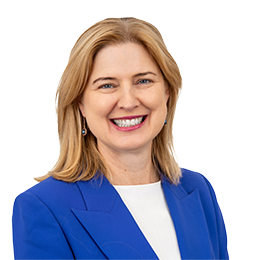
Interview with Lucy Breaden, ABC Hobart Drive
27 April 2026
E&OE TRANSCRIPT
RADIO INTERVIEW
ABC HOBART DRIVE
FRIDAY, 24 APRIL 2026
SUBJECTS: Fertiliser and fuel for Australia’s farmers and producers; Mayor of Kingborough Council
LUCY BREADEN, HOST: Julie Collins, hello, thanks for your time.
JULIE COLLINS, MINISTER FOR AGRICULTURE, FISHERIES AND FORESTRY: Good afternoon, Lucy, and to your listeners this afternoon.
BREADEN: So, you've been in a meeting today. Can you tell us about that and what the outcome was?
COLLINS: Yeah, Agriculture Ministers from across the country have had a meeting today to discuss the impact of what is a global impact of the war in the Middle East and how it's affecting Australia's primary producers, our farmers, right across Australia, and we got a report from each of the Ministers from around the country, and obviously a report from us as a Federal Government about what we're doing to secure those two critical inputs for our farmers, the diesel and the fertiliser.
BREADEN: So, what are you doing to secure diesel and fertiliser?
COLLINS: Well, what you've seen from our government is we've been talking to a lot of our near neighbours and trading partners in relation to securing additional diesel supply, and we've made some announcements over the past week of additional diesel that's coming into the country, hundreds of millions of litres extra now. And of course our fertiliser, we were able to announce a week or so ago that 250,000 additional tonnes is coming into Australia, and of course we have made some changes in relation to our biosecurity to get it into the country faster. So, no reduction in biosecurity, just an offshore process to speed that up. And we are also working with what's called Export Finance Australia, which is essentially how we're helping commercial fertiliser companies secure fertiliser that is available on the spot market globally. So we're working with them, and we got an agreement with them this week for the two big fertiliser companies to bring that into the country. As you indicated, fertiliser, most of our urea, and we're talking particularly urea here, comes through the Strait of Hormuz, normally about 60 per cent, so we do have a shortfall, and securing this 250,000 tonnes is about 20 per cent of what we think is the shortfall. But we do have enough urea in Australia for the initial planting season, but this is about trying to provide some certainty in very uncertain times for our farmers going forward.
BREADEN: So, it's enough for the initial planting season. What I've heard as well is that's enough for around a fifth of the remaining fertiliser needed for this cropping season. So, what's being done to, I guess, secure and give farmers peace of mind moving forward?
COLLINS: Yeah, well, we're talking to our Southeast Asian countries, and we're talking globally, and we're working with these fertiliser companies internationally now to secure more spot market availability of urea fertiliser to bring into Australia, and we continue to do that. We're doing everything we can to secure the fertiliser that Australia needs, realising of course that this is a global impact in terms of the Strait of Hormuz being closed. So, that 250,000, as you say, is about 20 per cent of the existing shortfall, and we will continue those discussions with our near neighbours and our trading partners to secure as much as we possibly can in the coming weeks and months. We're expecting that additional fertiliser to come into the country around late May, early June.
BREADEN: Okay. And I'm sure that will be welcome relief to farmers listening in now, and if that is you, how is the situation going for you? 0438 922 936. Is today's news welcome news? This is Julie Collins, the Minister for Agriculture, Fisheries and Forestry on Drive, with me, Lucy Breaden, 936 ABC Hobart, and we're talking about a meeting that happened today with Agricultural Ministers, and of course the Federal Government to take a look at the situation that's unfolding right now in the Middle East. What are you hearing specifically from farmers, Minister, and in terms of the cost of food? Because food insecurity is something so many of us are grappling with, and then of course with everything going up, this is, you know, the last thing many people need.
COLLINS: Yeah, we understand, obviously, that diesel and fertiliser are critical inputs for our farmers, but also important for consumers in terms of our food security, so we've been having discussions in relation to food security and the entire supply chain to do everything we can do to keep that moving for Australians, to put downward pressure on prices, understanding that input costs are obviously going up for our farmers. We've got the fertiliser working group meeting every week, I'm meeting every week with industry representatives from across our farming sectors, talking to them, we're working with some of the intensive farming sectors who require a lot of diesel to be able to get a better, clearer picture of how much they need and to make sure that those food security systems and supply chains are as secure as they can. We've got government departments working on things like plastics and those other parts of the supply chain that are really critical. Transport obviously is a very big one in terms of keeping the food moving, so we're doing all of that and we're working with our State and Territory counterparts as well, so it's important that we continue to have that coordinated work working with other tiers of government and with industry.
BREADEN: Will food prices go up at the supermarket? Is that inevitable?
COLLINS: Well, the Treasurer has been pretty upfront that we do expect there to be an inflationary impact of this war. What we're doing as a government is doing everything we can to shield Australians as much as possible, and as I said, we've done that by, you know, doing things like, you know, reducing the fuel excise, we have been doing it in terms of securing those critical supplies for people, particularly our farmers, and we continue to do that work along with supply chains. So, we're doing everything we can possibly do as a government to shield Australians as much as we possibly can.
BREADEN: Julie Collins is my guest, Minister for Agriculture, Fisheries and Forestry, with me, Lucy Breaden, on Drive, 936 ABC Hobart, talking about fuel and fertiliser, how this may impact you when you go to buy your goods, your bread from the supermarket, and just how farmers are grappling with the situation right now as well, because, of course, not only do they need good weather, but they also need diesel and fertiliser to get things moving. In terms of our fuel supply, what is it right now as it stands? I mean how many weeks into the future are we looking?
COLLINS: Yeah, thank you for that, Lucy. So, Minister Bowen, who's the Minister for Energy, has been doing weekly updates to provide transparency around how much we've got in terms of our stockpiles, which we have released 20 per cent, we've built those back up, but also about how much fuel is moving around in the Australian economy. And what we've seen is we've seen an increased demand for diesel, which is why we've worked so hard to get more diesel into particularly regional communities and those farming areas across Australia to be able to meet that increased demand. So, we've done things like change some of the fuel standards, we've released initially some of that stockpile, as I said, and we're busy rebuilding that up. We've made announcements this week about the hundreds of millions of additional diesel coming into the country, and certainly Minister Bowen this week, because it's Anzac Day tomorrow, will be doing his weekly update, not on Saturday but on Sunday, where he'll give us all the numbers about how much fuel is coming into the country and the number of ships, et cetera. And the Tasmanian State Government, I understand through TasALERT has got information available on the situation in Tasmania, so people can go to that to have a look, and it says that all five of Tasmania's fuel terminals are stocked.
BREADEN: Okay. Excellent to hear. It's a quarter past 4. Look, just before I let you go, Julie Collins, a question without notice, but we have just heard Kingborough Mayor, Paula Wriedt, has announced she's hanging up her hat, she's moving away from politics. Of course, as you'd know, she's had a really long career in the public eye, she's been a Labor Minister, but she's blaming a toxic workplace, social media bullying. I mean is there anything that you'd like to talk about in terms of just how you've grappled with that as someone in the public eye for so long and how you've d.ealt with that? Can you understand where the Kingborough Mayor, Paula Wriedt is coming from here?
COLLINS: Yeah, thanks, Lucy. First of all, I'd like to wish Paula all the very best. She's been a terrific champion as Mayor down there for Kingborough, and I've worked well as the local member with her, and I wish her all the very best. What I can say more broadly is perhaps we all need a bit more kindness in the world, and kindness doesn't go astray. I mean my staff tell me not to read the comments, but of course everybody does, and you know, people do get impacted by it, and certainly I'm doing everything I can do to focus on the job that I'm elected to do, and that's deliver for Tasmanians and Australians in my role, but I can certainly understand that after many years of it that Paula has had enough, and I wish her all the very best.
BREADEN: Julie Collins, thanks so much for your time today, appreciate it.
COLLINS: Thanks very much