
Interview with Patricia Karvelas, ABC Afternoon Briefing
31 March 2026
E&OE TRANSCRIPT
TV INTERVIEW
ABC AFTERNOON BRIEFING
TUESDAY, 31 MARCH 2026
SUBJECTS: Supporting farmers impacted by Middle East conflict; National Cabinet; Middle East conflict.
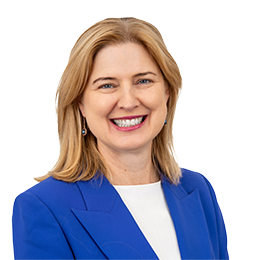
PATRICIA KARVELAS, HOST: Also this afternoon the Government has announced a series of actions to help secure food supply, including a new fertiliser working group. The Agriculture Minister Julie Collins joins me now. She's of course behind that latest group. Welcome.
JULIE COLLINS, MINISTER FOR AGRICULTURE, FISHERIES AND FORESTRY: Thank you, Patricia.
KARVELAS: What's the group meant to do?
COLLINS: Well what it’s about, is better coordinating right across government but also with industry to make sure that we get the fertiliser we need in the months to come. We know we've got enough fertiliser in Australia for the moment, but this is about surety of supply to give our farmers certainty in what is an uncertain world at the moment.
KARVELAS: Okay. In terms of fertiliser, that new power of underwriting to be able to purchase fuel we confirmed yesterday of course applies to fertiliser as well. Is export finance out in the market funding the underwriting potentially of fertiliser, is that happening yet?
COLLINS: Well it will be able to do so as part of the amendments that we've made, and this is because globally there is competition, of course, about making sure that countries get the fertiliser supply they need. We're obviously having to look at alternative countries and sources of fertiliser, and we're doing that together with industry and seeing what we need to do to make sure that we provide certainty for farmers.
KARVELAS: So in terms of the working group, is it about coordinating where to send the existing fertiliser, is that like just in terms of logistics, what's the situation?
COLLINS: It's about coordinating getting supply into the country and then about the distribution as well. So it's both of those things. It's about working with international partners, working with the private sector to make sure we get the supply into the country, and then it's about working with the farming groups and associations to make sure that we're getting the fertiliser to where it needs to go.
KARVELAS: Okay, and even within the agriculture sector if there is a shortage of fertiliser that emerges, is there going to be a tiered response to put sort of a focus on areas where we need to produce as priorities?
COLLINS: Well obviously we're doing everything we can do to shield farmers generally from the impact of what is, you know, impacting globally the crisis in the Middle East. There's no doubt it's impacting Australian farmers and farmers right across the globe. So our job is to work with industry, and we've been doing that. We've been having regular roundtables with them every week to hear from them some of their concerns and some of their issues, and then we're getting on and problem solving them. So we're dealing with the immediate challenges but also, as you would expect us to be doing, planning for the short, medium and long term because none of us know how long this is going to go on for.
KARVELAS: But if there is a shortage
COLLINS: So this is about making sure--
KARVELAS: Would there be a tiered approach to what's a priority?
COLLINS: So we want to make sure that we've got the fertiliser we need here in Australia, Patricia, and I am told from fertiliser companies and organisations that there is some supply in the country, there's some on the water, and this is about making sure we have continuity of supply going forward.
KARVELAS: Okay. The VFF has expressed concern that despite lots of calls, National Cabinet actually didn't prioritise farmers and of course food freight for getting fuel supplies. Why not? I mean given that there's obviously going to have to be a priority why aren't they put on a priority list?
COLLINS: Well obviously we have, you know, the National Plan that's been agreed by National Cabinet. There are four stages to that. We're currently at Stage 2, which is Keep Australia Moving, which is our aim and where we all want it to stay or actually get better. You know, I don't think anybody wants to see us to get to Stage 3 and 4. But as I said we're obviously planning for that if that is necessary. So what we've done as a Government to date is, is we've ensured that farmers at the forefront. You've seen that in all of our actions, whether it be the action around the ACCC for fuel and fertiliser, whether it be about the underwriting of fuel and fertiliser, whether it be in relation to making sure that the 20 per cent of our stockpiles are going to the regions where our farmers are. So I think you can see from our Government's actions that we are actually prioritising farmers and the food supply system. I've also asked for a short rapid food system assessment to be done as part of the National Food Council, and that is coming to me in weeks rather than months. So, you know, we are working as a government to make sure that our food system remains strong in Australia because we know how important it is to Australians.
KARVELAS: Can you give me a sense of what you're looking for in that report, like what is it you want to see?
COLLINS: So the first priority is about the impact of diesel and making sure that diesel gets to where it needs to go to, to make sure that our food system remains strong. And then it will look at other inputs to our food production system. Longer term, obviously we'd already committed to a food security strategy because Australia's one of the few nations that doesn't have one and that was our Government's election commitment, and we have had several meetings of the Food Council already. But this is about focusing on the immediacy of what is happening in the Middle East and its impact here in Australia and across the globe and how we actually try and shield Australians from that.
KARVELAS: There's a report out that the states have now failed to agree on how to return the GST, the GST on fuel that was agreed to at the National Cabinet. If that doesn't go ahead, is that a breach of the National Cabinet's agreement?
COLLINS: Well we obviously want the states to, you know, also do what they can do to support Australian households and Australian farmers. You've seen our Government act in terms of the fuel excise, and we have done that and that was announced yesterday, the legislation introduced to the Parliament today. But of course the states did indicate at National Cabinet yesterday that they would work towards being able to do this and I hope that that work continues and that they actually get to a resolution where they're able to do that, because I think Australians expect every tier of government to be doing everything they can.
KARVELAS: So you're saying the Commonwealth does, is requiring, that they return it, that there can't be failure?
COLLINS: What I'm saying is, is that I think Australians expect every tier of government to do their very best to shield Australian citizens from the impact of this global situation.
KARVELAS: So if they can't come to an agreement, is that a failure?
COLLINS: Well we'd like to see them come to an agreement; I think that's been pretty clear.
KARVELAS: Okay. A couple of other questions. Easter's coming up of course, the end of next week. The Prime Minister's message just yesterday, I think it was the other day, it's been a big week, was get on with your Easter holidays, especially people of faith, of course it's a big deal for people. Isn't that a bit of a mixed message? Like if you've got potentially a fuel issue, why not ask people to avoid going on these trips?
COLLINS: Well I think we've been pretty clear that we're at the stage where we want to keep Australians moving, and we've been pretty clear with Australians that we expect them to take the fuel that they need, not more than they need. And the vast majority of Australians have been doing the right thing, and the Prime Minister's called out a couple of Australians caught on social media doing the wrong thing, but the vast majority of Australians are doing the right thing. And to date, all of the ships that have been coming to Australia have arrived in Australia, and the forward plan of what is coming up, you know, there are ships arriving in Australia and we're expecting our fuel supplies to continue, and that is the outlook at the moment.
KARVELAS: Okay. But do you support no one cancelling their Easter holidays, go on road trips?
COLLINS: I think what the Prime Minister was saying is this is, you know, a pretty special time for many Australians, and Australians, you know, should celebrate in their usual way and they should take the time.
KARVELAS: And not modify anything?
COLLINS: Well, I don't think he said not modify anything. What he said was, of course, was to celebrate in the usual way and to make sure that they take time out for what is a really important time for many Australians.
KARVELAS: Yep. Just on the war generally, Ted O'Brien has spoken to us for the program, we've already spoken to him, we'll play that shortly. He says the Prime Minister has been essentially flip flopping on his support for the war. He's asked, you know, he's listed his demands, the Prime Minister, but in fact he's just done that on the ABC, he hasn't really contacted the US. Do you support the war, or do you not support the war?
COLLINS: Well, I think what Australians want to see generally, and in fact I think most citizens across the globe want to see, is a de-escalation. I think that Australians, you know, want to see this de-escalated, they want to see life return to normal. And I think that that's what Australians want to see and I think the Prime Minister was articulating that, you know, that is Australia's position. We want to see this de-escalated.
KARVELAS: Well, end?
COLLINS: Yes.
KARVELAS: Okay. And that is obviously a different position to the original one where your Government supported the action that the US and Israel had taken. So is it a shift in the position?
COLLINS: I think what the Prime Minister was saying, and was pretty on 7.30 last night, was that, you, what he wants to see is a clear outline of the objectives and whether those objectives have been met, but a de-escalation overall is I think what most people want to see.
KARVELAS: And the other part of the critique from the Coalition is that the Prime Minister is driven by opinion polls. Now polls show that this is a very unpopular war with Australians. Is that why Labor has moved?
COLLINS: What you've seen from our Government is us responding to our engagement with Australian citizens, with Australian organisations, businesses, industry, farming groups. Our job as a government in times like this is to actually support and protect Australians as much as we can. Now we can't protect Australians completely from what is happening globally. Every nation has been impacted, citizens across the globe have been impacted. We're really focused on doing our job and listening to the feedback from the people who are on the ground all of the time and making sure that we respond as a government. And that's appropriate and that is we have been doing. As I said, I've been meeting with the farming groups every week for weeks now, myself, Minister Bowen, Minister Ayres, Ministers King. We have been meeting with our industry and our sectors and getting that feedback. I know that our MPs are listening to their local members and their local industries on the ground in their home states and electorates, and that is all being fed back in to make sure that we respond appropriately as a government.
KARVELAS: Minister, thanks for coming in.
COLLINS: Thanks very much, Patricia.